
Compute, Energy, and the Next Industrial Cycle
21.01.2026
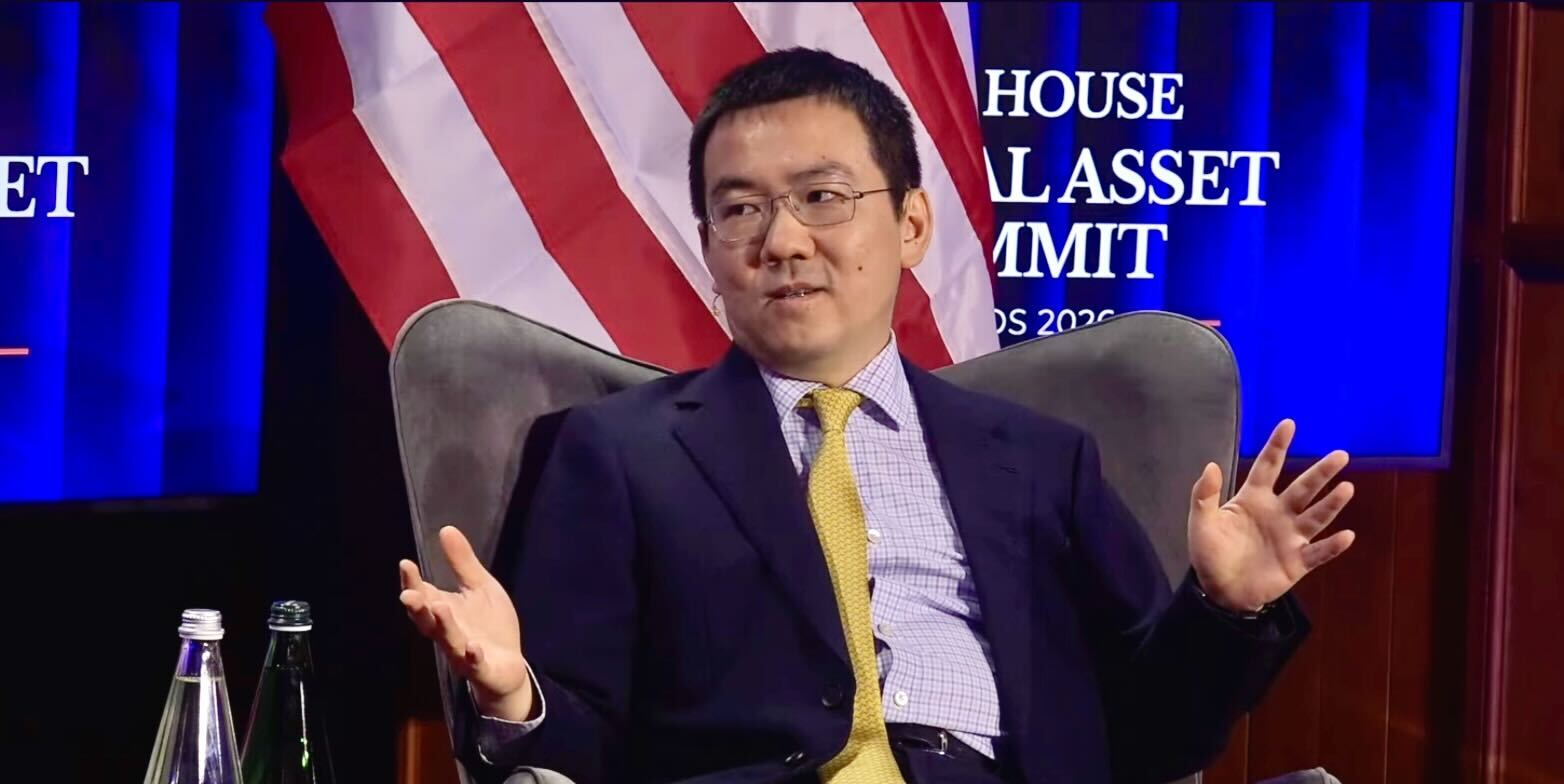
Bitdeer CEO Jihan Wu joined a Davos-stage discussion with the Digital Chamber’s Cody Carbone for a wide-ranging conversation on how compute, energy, and capital are reshaping the next industrial cycle. The discussion focused on why Bitcoin mining infrastructure has become foundational to AI, how power markets are evolving under compute demand, and why the United States is positioned to lead the next phase of industrialization.
Compute, Energy, and the Next Industrial Cycle
Bitdeer CEO Jihan Wu joined a Davos-stage discussion with the Digital Chamber’s Cody Carbone for a wide-ranging conversation on how compute, energy, and capital are reshaping the next industrial cycle. The discussion focused on why Bitcoin mining infrastructure has become foundational to AI, how power markets are evolving under compute demand, and why the United States is positioned to lead the next phase of industrialization.
A lightly edited transcript follows.
From Bitcoin mining to an infrastructure platform
Cody Carbone: Do you still see Bitdeer primarily as a Bitcoin mining company, or is it a broader compute and energy infrastructure company at this point?
Jihan Wu: Bitdeer is becoming an infrastructure company, but Bitcoin mining remains central. Bitcoin is the cornerstone asset in the digital asset space, and mining is essential to maintaining the security of the network. More importantly, mining pays back infrastructure capital efficiently. That matters when you are building power, transmission, substations, and data centers at scale.
Mining is what makes large-scale power investment economically viable in the early years. That same infrastructure can later support AI data centers and other high-density compute workloads.
Why the United States matters
Cody Carbone: Bitdeer has made major investments in the U.S. Why here, and why now?
Jihan Wu: The U.S. combines rule of law, deep capital markets, abundant energy resources, and capable people. Heavy infrastructure requires long payback periods, and that capital needs protection. Few places in the world offer that combination at scale.
There are many countries with power and resources, but political leadership often misunderstands Bitcoin mining and sees it as wasteful. That is wrong. The U.S. has taken a leadership position by recognizing that Bitcoin mining supports energy development and prepares the country for the next wave of AI-driven industrialization.
Power scarcity changes everything
Cody Carbone: How is the relationship between compute and energy fundamentally changing?
Jihan Wu: We came to the United States eight years ago and immediately noticed the U.S. has lacked investment in infrastructure for quite a long time.
For years, tech companies had the luxury of being able to talk about net-zero and ESG because computation required relatively little power. AI changed that overnight. Suddenly, power is scarce, timelines matter, and long-term contracts are back.
Computing is high-value-added, which means it can justify heavy upfront capital investment. That accelerates power generation, transmission upgrades, and grid expansion. Once built, that infrastructure benefits the broader economy, not just data centers.
Competition in energy — and why demand unlocks supply
Cody Carbone: How does this evolution impact energy markets?
Jihan Wu: Energy generation is highly competitive. There are many options available, including traditional nuclear power, Small Modular Reactors, gas, solar, wind, and batteries. That competition actually slowed investment because developers worried about demand uncertainty.
Large, durable compute demand changes that. When demand is credible, capital flows. That enables more generation, more R&D, and more domestic manufacturing capacity. Compute demand removes the fear that infrastructure will be stranded.
Compute as the new industrial input
Cody Carbone: Is computing the foundational input of the next industrial cycle?
Jihan Wu: Yes. Computing today is like coal or oil in previous industrial revolutions. AI capabilities improve rapidly when more computation is applied. Developers are not trying to reduce compute; they are trying to use more of it to get better results.
This means demand for computation will continue to grow, not shrink. Countries that can concentrate computing, power it reliably, and deploy it quickly will lead the next industrial cycle.
Capital markets and the risk of underinvestment
Cody Carbone: Do capital markets understand the scale of investment required?
Jihan Wu: There is concern about over-investment, but that is misplaced. The real risk is under-investment. Demand is already exceeding supply. AI teams compete internally for compute resources and globally for capacity.
The U.S. has an opportunity not only to meet domestic demand but to export computational services globally. That requires supportive industrial policy and a willingness to build infrastructure at scale.
Bitcoin mining as preparation for AI
Cody Carbone: Any final message for global policymakers?
Jihan Wu: Bitcoin mining is good for your country. It accelerates power infrastructure development and pays back capital quickly. Countries that allow mining to scale will be better prepared for the AI revolution ahead.
If you want to be ready for the next industrial cycle, you need power, infrastructure, and capital discipline. Bitcoin mining helps build all three.
*Information provided in this article is for general information and reference only and does not constitute nor is intended to be construed as any advertisement, professional advice, offer, solicitation, or recommendation to deal in any product. No guarantee, representation, warranty or undertaking, express or implied, is made as to the fairness, accuracy, timeliness, completeness or correctness of any information, or the future returns, performance or outcome of any product. Bitdeer expressly excludes any and all liability (to the extent permitted by applicable law) in respect of the information provided in this article, and in no event shall Bitdeer be liable to any person for any losses incurred or damages suffered as a result of any reliance on any information in this article.


